Supply chain operations are rapidly transforming with the rise of AI and digital technologies. Across sectors such as retail, distribution, logistics, warehousing, and manufacturing, businesses are under growing pressure to improve efficiency, reduce costs, increase operational visibility, and make faster, data-driven decisions.
Yet many organisations still rely heavily on manual processes, spreadsheets, disconnected systems, and reactive decision-making.
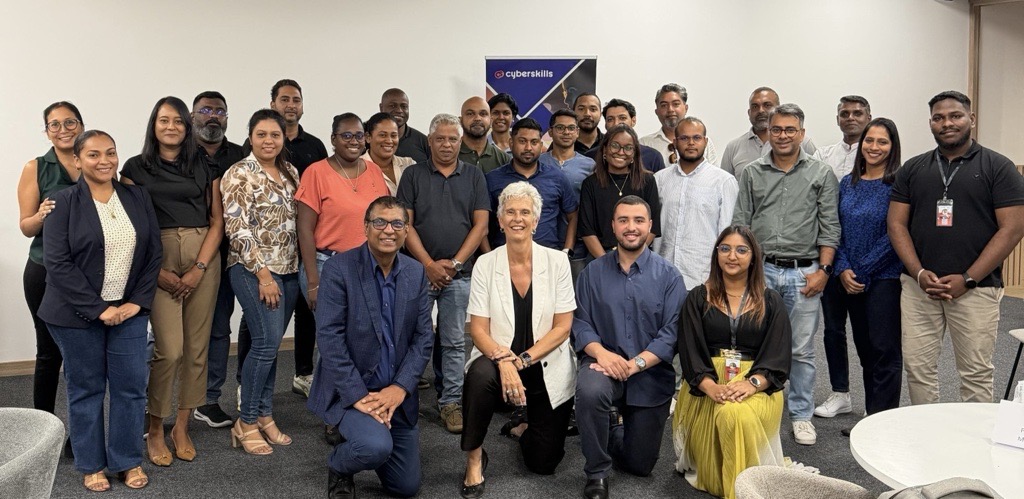
This growing operational complexity is precisely why Cyberskills, in collaboration with AUI Global, recently organised the “AI for Supply Chain” training program—a practical, hands-on initiative designed to help supply chain professionals better understand how artificial intelligence and modern technologies can support day-to-day operations.
Moving Beyond Theory: Making AI Practical
One of the key objectives of the training was to demystify artificial intelligence.
Today, AI is often perceived as something highly technical, complex, or inaccessible. However, the reality is that many practical AI tools already exist and can help organisations improve areas such as:
- Demand forecasting
- Inventory management
- Warehouse visibility
- Route optimisation
- Traceability
- Operational decision-making
Rather than focusing on theory alone, the training adopted a highly practical and immersive format. Participants worked on real-world use cases, explored accessible AI tools, and discussed operational challenges directly linked to their own environments.
From analysing sales trends and forecasting inventory needs to understanding warehouse inefficiencies and automating repetitive tasks, the sessions focused on solutions that participants could realistically apply within their organizations.
Addressing Real Operational Challenges
Throughout the program, participants from various sectors exchanged insights around common operational pain points faced by businesses in Mauritius today, including:
- Stock shortages and overstock situations
- Limited operational visibility
- Manual inventory tracking
- Inefficient warehouse processes
- Delivery planning challenges
- Difficulty leveraging operational data effectively
According to Dr. Viv Padayatchy, expert in digital transformation and warehouse management, one of the biggest challenges organisations face today is not necessarily the lack of data, but rather the inability to transform that data into fast and effective decisions.
“Today, many organisations possess data, but very few are truly able to leverage it to make fast and effective decisions. The objective of this training was to make AI tangible, accessible, and directly applicable to the operational realities of Mauritian businesses.”
A Collaboration Combining International and Local Expertise
The program brought together expertise from both AUI Global and Cyberskills.
For Deborah Bartlett, the collaboration created significant value for participants by combining international perspectives on AI and supply chain transformation with local operational expertise and market realities.
“Participants actively practiced with practical AI tools rather than simply viewing PowerPoint presentations. As a result, they quickly became familiar with several AI tools capable of solving everyday operational challenges. AUI Global brought international expertise together with Generation Z AI natives who coached participants in solving real-time supply chain challenges during the sessions. Cyberskills, through Dr Viv Padayatchy, contributed valuable local expertise and a concrete understanding of the operational realities of the Mauritian market.”
This combination allowed participants to better connect global trends with practical realities experienced within Mauritian operations.
The Growing Importance of Digital Skills in Supply Chain
As supply chains become increasingly data-driven and customer expectations continue to rise, organizations are recognising that operational efficiency can no longer rely solely on traditional methods.
The future of supply chain management will increasingly depend on:
- Real-time visibility
- Data-driven decision-making
- Automation
- Predictive analytics
- Digital collaboration
- AI-assisted operations
For many professionals, the training served not only as an introduction to AI tools but also as an opportunity to rethink operational processes and identify practical areas for improvement within their own organisations.
Looking Ahead
The strong engagement and feedback from participants highlighted a growing interest in practical, accessible, and business-oriented approaches to artificial intelligence within supply chain and logistics operations.
More importantly, it reinforced a key message:
AI is not about replacing operational professionals.
It is about equipping them with better tools to make faster, smarter, and more informed decisions.
As businesses continue to navigate increasingly complex supply chains, the integration of digital tools and AI is quickly becoming a key driver of competitiveness, resilience, and operational performance.
Recent posts